



Inside Story
As we move further into 2026, employers are facing a number of significant employment law developments that will require careful planning and preparation.
In this month’s HR Update, we highlight three important areas that should be on every employer’s radar: new retirement age legislation, enhanced gender pay gap reporting requirements, and the latest position on Ireland’s implementation of the EU Pay Transparency Directive.
Trending Now
Retirement Age Legislation Now in Effect
The Employment (Contractual Retirement Ages) Act 2025 came into force on 29 June 2026, introducing new rights for employees whose contractual retirement age is below the State pension age of 66.
Eligible employees can now formally notify their employer that they wish to continue working beyond their contractual retirement age. Employers must carefully consider these requests and, where retirement is enforced, be in a position to objectively justify the decision.
Organisations should review retirement policies, contractual retirement provisions and internal processes to ensure compliance with the new legislation and the updated WRC Code of Practice on Longer Working.
Gender Pay Gap Portal Opens to Public View
The public-facing Gender Pay Gap Portal has now been launched, allowing employees, job seekers and the wider public to view and compare gender pay gap data submitted by employers.
While publication on the portal was voluntary during the 2025 reporting cycle, it will become mandatory for in-scope organisations from the 2026 reporting cycle onwards.
Employers should remember that existing obligations to publish gender pay gap reports on their website (or make them otherwise publicly available) remain in place.
With increased public visibility of pay gap reporting, ensuring accuracy, context and a clear action plan has never been more important.
Pay Transparency – More Time, But Not Time to Delay
Although Ireland has missed the EU deadline for transposing the Pay Transparency Directive into domestic legislation, employers should not view this as a reason to postpone preparations.
The Directive will introduce significant changes, including:
✅Greater pay transparency during recruitment
✅Restrictions on salary history questions
✅Enhanced employee rights to pay information
✅Expanded reporting and equal pay obligations
The additional lead-in time provides organisations with an opportunity to review pay structures, identify potential pay equity risks and prepare for what will be one of the most significant workplace compliance changes in recent years.
How EMGHR Can Help
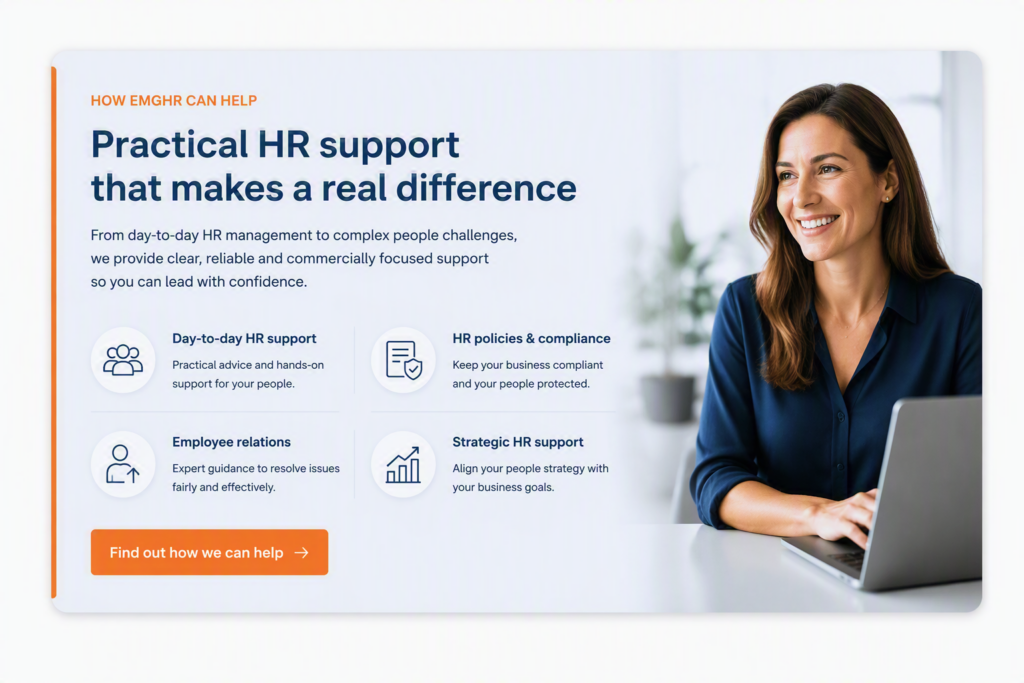
EMGHR supports employers across Ireland with practical, commercially focused HR and Employment Law advice.
Our services include:
✅Employment Law Compliance
✅Retirement Age Compliance
✅Gender Pay Gap Reporting
✅Pay Transparency Readiness
Action Step
Practical Steps Employers Should Be Taking Now
✅ Review contractual retirement ages and policies
✅ Assess readiness for gender pay gap reporting obligations
✅ Audit recruitment and pay practices
✅ Review pay structures and progression frameworks
✅ Train managers on upcoming legislative changes
✅ Ensure policies and handbooks reflect current legal requirements
How EMGHR Can Help
At EMGHR, we support employers with practical, commercially focused HR and employment law advice. Whether you need assistance with retirement age compliance, gender pay gap reporting, policy reviews, employment law updates or ongoing HR support, our team is here to help.
Case Law
Case Number: ADJ-00057991
Mark Brennan V Marks and Spencer Ireland Limited
A recent WRC decision found that a retailer unfairly dismissed an employee whose staff discount account had been misused by his partner and others without his knowledge.
While the WRC accepted that the employer had followed a fair disciplinary process and that the employee had been careless, it concluded that dismissal was a disproportionate sanction. The Adjudication Officer found that a lesser disciplinary penalty, such as a final written warning, could have been appropriate.
The employee was awarded €2,000 compensation, with the award reduced to reflect his contribution to the situation.
Key takeaway for employers:
Even where misconduct is established and procedures are followed correctly, employers must ensure that the disciplinary sanction is proportionate to the circumstances and that less severe alternatives have been properly considered.
Implications for Employers
This decision reinforces that following a fair process alone may not be enough to defend an unfair dismissal claim. Employers must also be able to demonstrate that the sanction imposed is reasonable and proportionate to the misconduct involved.
EMGHR Comment:
This case serves as a useful reminder that the WRC will examine not only whether procedures were fair, but also whether the employer’s decision to dismiss fell within the range of reasonable responses available in the circumstances. Employers should ensure disciplinary decisions are both procedurally fair and proportionate to the facts of the case.
Partnership
EMGHR & Collier Training Partnership
We are delighted to announce our partnership with Collier Training, allowing us to provide clients with access to a broader range of professional training and development solutions.
Areas of support include:
✅Management Development
✅HR Compliance Training
✅Health & Safety Training
✅Leadership Development
✅Workplace Skills Programmes
Together, we are helping organisations build stronger, more capable teams.